Landscaping is the first thing a buyer sees and the last thing most sellers think about. In April 2026 homes in Morris County were moving in 17 days, and buyers in Essex were paying 107% of asking price. When homes sell that fast, the first impression at the curb sets the tone for the whole showing.
Below is what to plant right now in NJ, the curb appeal moves with the best return, and the mistakes that hurt street appeal before a single showing.
When to plant in NJ: May is your window
New Jersey spans USDA Hardiness Zones 6a (northwest Morris, Sussex, Warren counties) to 7b (Hudson, Bergen coastal areas). By mid-May, most of the state has cleared its last frost date:
| Region | Last Frost (avg) | Safe Planting Start |
|---|---|---|
| Northwest NJ (Morris, Sussex, Warren) | May 10–15 | Mid-May |
| Central NJ (Middlesex, Somerset, Mercer) | Apr 25–May 5 | Early May |
| Shore & South (Monmouth, Ocean, Burlington) | Apr 15–25 | Late April |
| Urban NE (Hudson, Bergen, Essex, Union) | Apr 10–20 | Late April |
In Somerset or Morris, after a late cold snap, I'd wait until the second week of May to put warm-season annuals in the ground. One frost kills impatiens overnight.
The high-impact plantings
1. Flowering trees: the biggest visual return
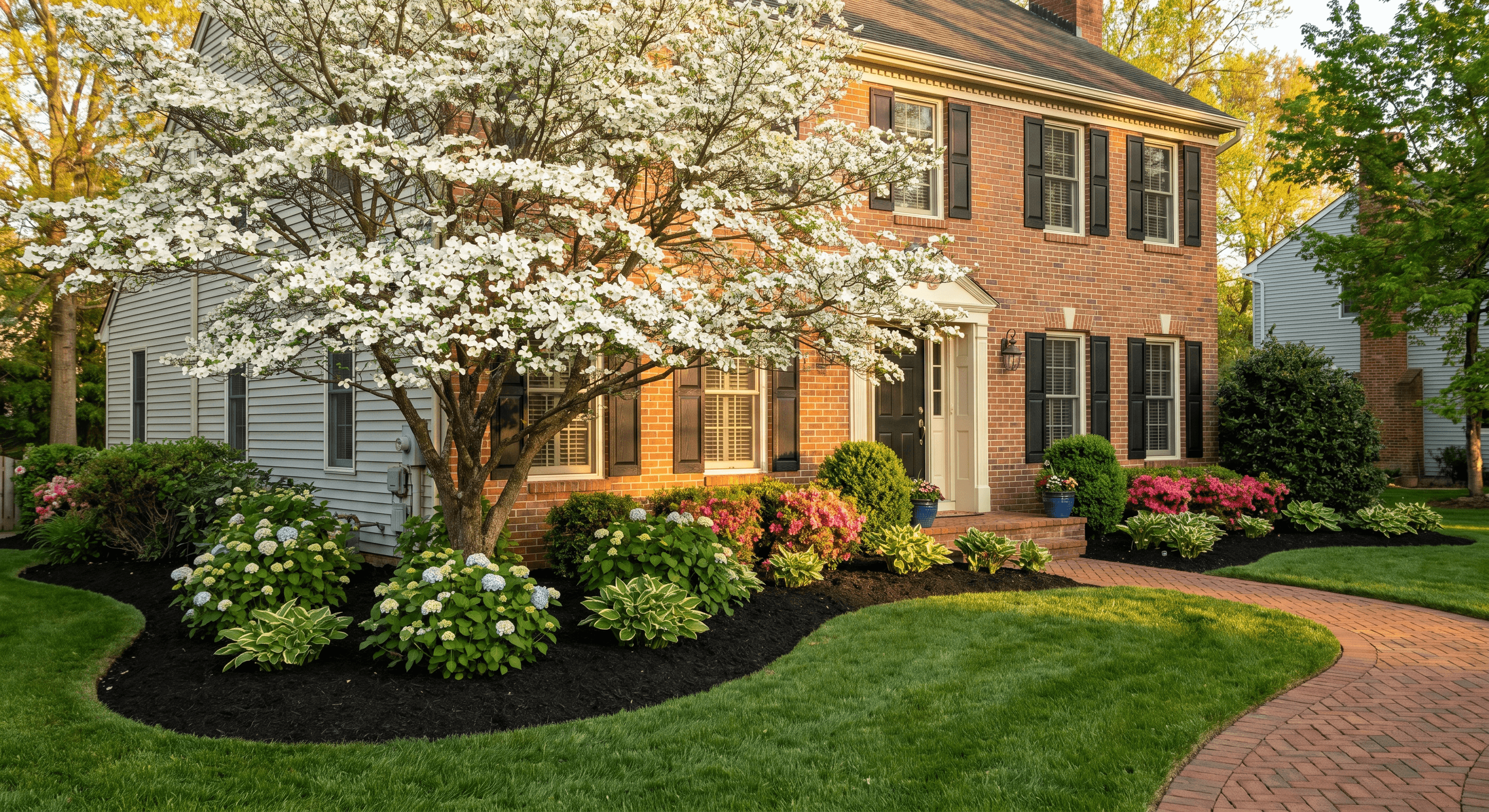
Of everything you can plant, a flowering tree gives you the most to look at from the street. Plant one this spring and it'll be established and in full bloom by next season, which is worth planning for if you might sell in the next 1–3 years.
Best picks for NJ:
- Dogwood (Cornus florida) is NJ's state tree, with white or pink blooms in April–May, red berries in fall, and good branch structure year-round. It thrives in zones 5–9, and it tolerates partial shade. Plant it away from turf areas where foot traffic compacts the roots.
- Yoshino Cherry is the classic spring statement tree. It grows fast and puts out a cloud of white bloom. It does best in full sun, so avoid low spots where water pools.
- Serviceberry (Amelanchier) blooms earliest (late March) and has edible berries and golden fall color. It's native, low maintenance, and underused, and it works in wet sites where other trees struggle.
- Redbud (Cercis canadensis) puts out vivid magenta blooms directly on the bare branches before the leaves emerge. Its compact size (15–20 ft) makes it a good fit for small front yards in Bergen or Hudson.
One well-placed specimen tree near the front corner of the property reads better than three small ones scattered around. Give it room. It's a 20-year investment.
2. Foundation planting: keep it below the windows
Overgrown foundation shrubs are one of the most common curb appeal problems in NJ's older housing stock. If your foundation plants are taller than the first-floor windowsills, they're hurting you.
What to remove:
- Overgrown arborvitae blocking windows or siding
- Leggy, woody forsythia that's half-dead in the middle
- Any shrub touching the house, which draws moisture and pests
Compact evergreens to plant instead, for year-round structure:
- Inkberry Holly (Ilex glabra) is native and deer-resistant and stays 3–4 ft, with dark glossy leaves and black berries. It does well in wet NJ soils.
- Little Giant Arborvitae stays under 4 ft naturally with no shearing, and it's dense and tidy, with winter interest.
- Dwarf Blue Spruce is silver-blue and slow-growing, and it makes a good corner anchor.
Flowering shrubs to add for seasonal color:
- Knock Out Rose blooms from May through frost, resists disease, and needs little maintenance. I'd have at least one in every front bed.
- Endless Summer Hydrangea is a reliable rebloomer on new and old wood. It turns blue in acidic soil (most of NJ) and pink in alkaline soil. Plant it where it gets morning sun and afternoon shade.
- Itea 'Little Henry' is a native sweetspire with fragrant white blooms in June and brilliant red-orange fall color, and it tolerates wet soil and partial shade.
Keep foundation plantings below windowsill height. Three feet is the sweet spot for most NJ ranch and colonial styles.
3. Annuals for instant color
Annuals are the fastest fix for a spring or summer listing. A $40 flat of flowers can transform a front walkway that would otherwise look bare.
For NJ full sun:
- Lantana is heat-tolerant, blooms all summer, and attracts butterflies, in yellow, orange, or multicolor. It's nearly unkillable once established.
- Zinnias bloom July–October in vivid colors, and you can direct-sow the seeds after frost (very cheap). They make a good cutting garden along the driveway.
- Calibrachoa (Million Bells) trails, works in containers or window boxes, and flowers continuously without deadheading.
For NJ shade:
- Impatiens is the classic NJ shade annual. It's dense and colorful and loves consistent moisture. Don't plant until night temps stay above 50°F.
- Begonias are more drought-tolerant than impatiens, work in part sun or shade, and have waxy leaves that look tidy all season.
- Caladium is grown for its foliage: heart-shaped leaves in white, pink, and red. Plant the bulbs after the soil warms to 65°F, which is late May in most of NJ.
For pots near your front door, use the "thriller, filler, spiller" formula: one tall focal plant (thriller), compact mounding annuals (filler), and something trailing over the edge (spiller). One good pot on each side of the front door looks better than six mediocre ones.
Curb appeal moves that matter to buyers
When I walk properties with buyers, these are the things they notice. The second list is mostly noise.
High ROI: do these
- Mulch everything. Fresh mulch is the single cheapest per-square-foot improvement you can make. Dark brown or black hardwood mulch, 2–3 inches deep, makes every plant look intentional and well kept. Budget $150–$300 for a typical NJ front yard, and do it the week before photos.
- Edge the beds. A clean physical edge between lawn and bed looks professional. Use a half-moon edger, or a straight spade along a garden hose laid out as a guide. It takes 30 minutes and costs nothing.
- Power wash the front walk and driveway. Years of algae, dirt, and tire marks come off with a $50 rental, and a clean concrete front walk tells buyers the home is maintained before they reach the door.
- Paint or replace the front door. A fresh coat in a saturated color (deep navy, forest green, brick red, matte black) costs $50 in paint and makes listing photos pop. Replace the hardware at the same time: new deadbolt, new door handle, and new house numbers ($80 total at Home Depot).
- Fix the mailbox. Buyers stop at the mailbox before the front door, and a rusted, tilted, or faded one is a small thing that reads as neglect. A new post-mount mailbox is $40.
Lower ROI: skip these if you list soon
- Sod. It takes 3–4 weeks to root and can't be walked on. I'd seed instead, or just overseed thin spots and let the mulch do the visual work.
- Elaborate perennial gardens. In May, before things have filled in, buyers don't know what they're looking at. Annuals look better in listing photos.
- New fencing. It costs a lot, and the style can be polarizing. Paint or stain the existing fence instead.
- Irrigation systems. They pay off over the long term, but a buyer who sees new irrigation trenching in listing photos wonders what else was just done.
NJ-specific issues to address in spring
Deer damage
In Morris, Somerset, Hunterdon, and Monmouth counties, deer pressure is real. Tulips, hostas, and rhododendrons planted without protection will be eaten by June. Stick to deer-resistant plants: ornamental grasses, coneflowers (Echinacea), salvia, boxwood, lavender, catmint, and spirea.
Heavy clay soil
Much of central NJ (Middlesex, Somerset, Mercer) has dense clay that drains poorly and compacts easily. Amend with compost before planting: at least 3 inches, worked in 8–10 inches deep. For spots that stay wet, plant natives that tolerate seasonal flooding, like buttonbush, inkberry, or red twig dogwood.
Salt damage near roads
Properties near roads in Bergen, Hudson, Essex, and Union counties often have salt-damaged soil from winter road treatment. The visible sign is brown, crispy needle tips on evergreens in early spring. Flush the affected areas with deep watering before planting, and choose salt-tolerant species near the street edge: ornamental grasses, juniper, rugosa rose, and black-eyed Susan.
The before-photos checklist
If you list in the next 30–60 days, run through this before the photographer arrives:
- Fresh mulch in all beds (dark hardwood, 2–3 inches)
- Beds edged cleanly
- Front walk and driveway power-washed
- Lawn mowed and trimmed (day before photos)
- Dead annuals from last year removed
- Foundation plants pruned below window sills
- Front door freshly painted or cleaned
- New house numbers and door hardware
- Mailbox upright and clean
- Hoses, trash cans, and lawn equipment out of frame
- One or two good container plantings flanking the front door
- All weeds pulled from beds and cracks in hardscape
You don't need a professional landscaper for most of this. Two weekends and $300–$500 in materials can take a front yard from forgettable to a reason the buyer calls their agent before leaving the driveway.
Want a second set of eyes?
Before you make any landscaping decisions for a spring or summer listing, I can do a pre-listing walkthrough of the property with you. I'll tell you what buyers in your county tend to notice, and what's worth the money before photos.
Related reading
- Spring Home Maintenance Checklist for NJ Homeowners: the structural side to pair with this guide
- How to Sell Your NJ Home in 2026: the full seller playbook
- NJ Real Estate Market Report — April 2026: what the market was doing in April 2026
Source: Plant hardiness zone data from USDA. Market timing references based on April 2026 Redfin Data Center data.