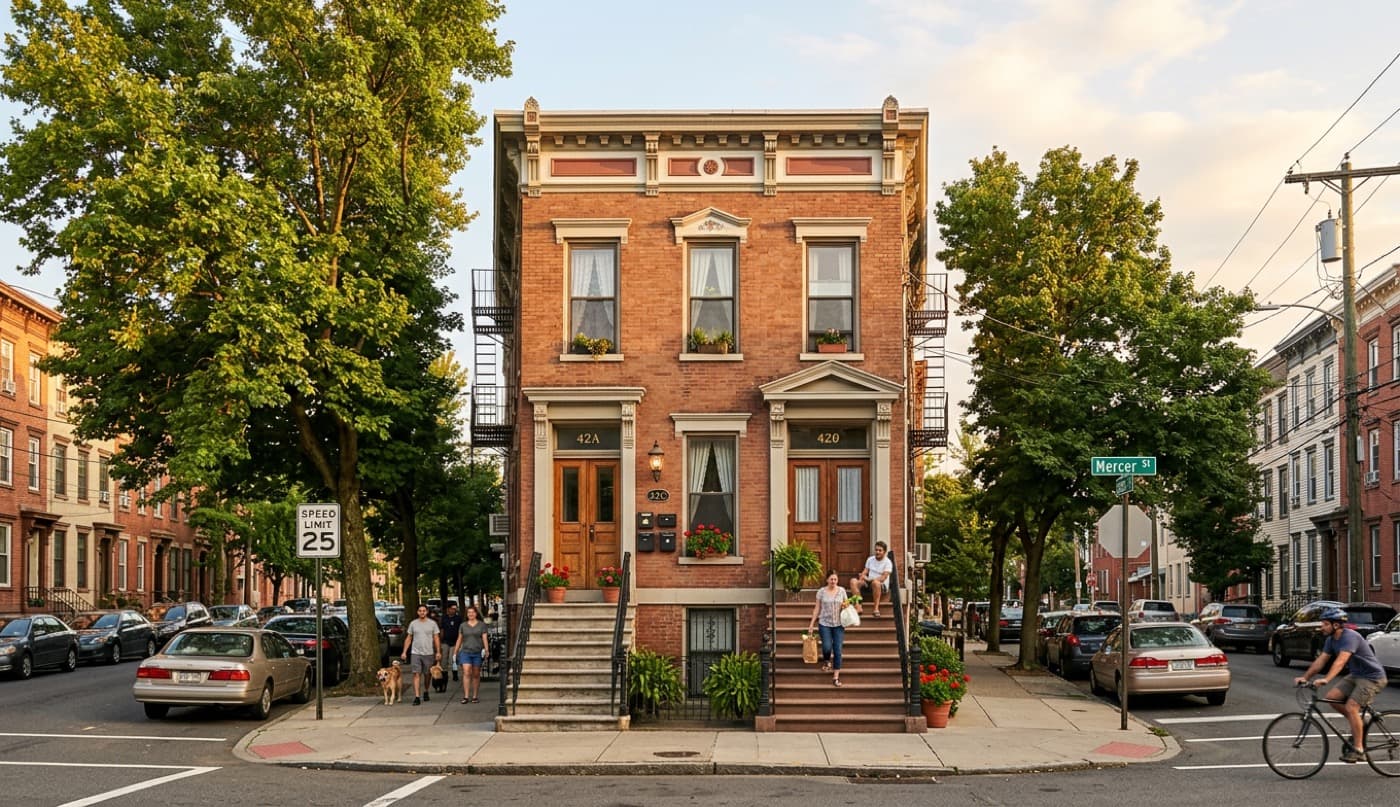
For a first-time buyer in New Jersey, one of the most overlooked moves is to skip the single-family home and buy a two-, three-, or four-family instead. You live in one unit and rent out the others. Your tenants help cover the mortgage, and you start in homeownership and real estate investing at the same time.
It's called house hacking, and New Jersey is one of the best places in the country to do it. Our older cities are full of two- and three-family homes, rental demand is strong (NYC and Philadelphia are close, and so are major universities), and the financing is far more accessible than most people assume.
The short version: Buy a 2–4 family, live in one unit, and rent the rest. As an owner-occupant you can put down as little as 3.5% (FHA), 5% (conventional), or 0% (VA), and lenders count about 75% of the other units' rent toward qualifying. Your tenants help you buy the property and then help pay the mortgage.
Why NJ is built for house hacking
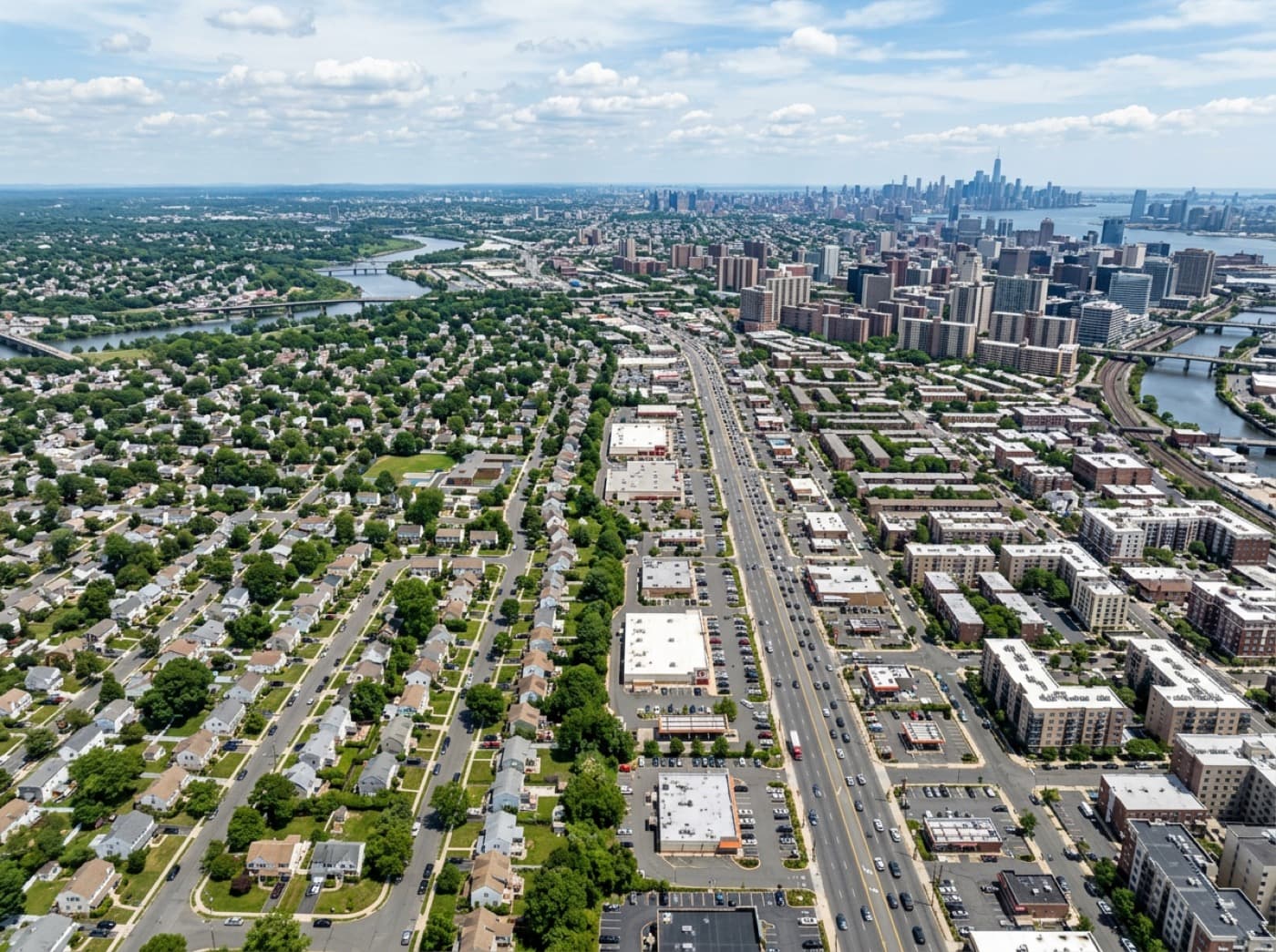
Walk through Jersey City, Newark, Union City, Bayonne, Paterson, or Elizabeth and you'll see block after block of two- and three-family homes. These cities were built for exactly this: owner-occupants living in one unit and renting the rest.
Three things make NJ especially strong for the strategy:
- Deep multifamily inventory in Hudson, Essex, Passaic, and Union counties
- Durable rental demand, with NYC and Philadelphia commuters and university towns keeping units full
- Rents high enough that, in the right building, the other units can cover a large share of your payment
The tradeoff is New Jersey's high prices and property taxes. That's why I'd run the numbers carefully before you fall in love with a building.
The financing: less down than you think
This is the part that surprises people. You don't need investor-level money down, because you're going to live there. That qualifies you for owner-occupant loan terms on a property that also produces income. Here's what each loan asks for down on an owner-occupied 2–4 unit:
| Loan type | Down payment | Notes |
|---|---|---|
| FHA | 3.5% (580+ credit) | Most popular house-hack loan; 10% down if score is 500–579 |
| Conventional (Fannie Mae) | 5% | A late-2023 rule change dropped this from 15–25%, a big deal |
| VA | 0% | For eligible veterans; unbeatable if you qualify |
Two mechanics to know:
- Rental income helps you qualify. Lenders let you count a large share of the projected rent from the other units (typically around 75%) toward your income, so the building's cash flow can help you get approved for a bigger loan.
- You must occupy one unit, generally for at least 12 months. These are owner-occupant programs, and living there is the whole basis for the low down payment.
The FHA "self-sufficiency test" (the 3–4 unit gotcha)
If you're buying a three- or four-unit property with an FHA loan, learn the self-sufficiency test before you shop.
For 3–4 unit FHA purchases, the property's projected rents (after a 25% vacancy/expense deduction) must cover the entire mortgage payment. The building essentially has to pay for itself. In a high-priced NJ market that math can be hard to hit, and it knocks a lot of 3–4 unit FHA deals out.
Two more notes:
- Duplexes (2-unit) are exempt from the self-sufficiency test, which is a big reason two-families are the most popular starting point here.
- If a 3–4 unit doesn't pass FHA, the conventional 5%-down route (no self-sufficiency test) may still work.
FHA also asks for reserves: roughly 3 months of payments for 3–4 units, and about 1 month for a duplex.
Run the numbers before you fall in love
House hacking lives or dies on the math. Before you make an offer, model it:
- Total monthly payment: principal, interest, NJ property taxes (they're high, so budget carefully), and insurance. Start with the mortgage calculator.
- Realistic rent from the other unit(s), based on actual local comps.
- Your effective housing cost, which is the payment minus the rent you collect. The goal is to live for far less than a single-family payment, sometimes close to free.
- Investor metrics. Once you eventually move out and rent your unit too, what are the cap rate and cash flow? Model the fully rented scenario with the investment calculator.
A common trap is a building that looks great until you plug in NJ's property taxes.
Being a landlord in NJ
Living next to your tenants is the reality of house hacking, and New Jersey has strong tenant protections you need to understand before you close:
- NJ's rules on security deposits, notice requirements, and evictions favor tenants more than many states' rules do.
- Some cities (including parts of Hudson and Essex) have rent control.
- You're responsible for maintenance, repairs, and habitability, so factor the time and cost into your plan.
- Screen tenants carefully. A bad tenant in the unit next door is a very different problem from one across town. Apply the same written screening criteria to every applicant, and check NJ fair housing rules before you set them.
None of this is a dealbreaker, but being a landlord is a job, not passive income.
The long game
House hacking pays off most in what it sets up:
- Year 1–2: Live cheaply while tenants cover most of your mortgage.
- Later: Move into your next home and rent out your former unit. The whole building becomes a cash-flowing investment, often financed at the low owner-occupant down payment you locked in years earlier.
- Repeat: Some investors do this every couple of years, building a small portfolio one owner-occupied purchase at a time.
Is house hacking right for you?
For a first-time buyer in New Jersey who's open to living in one unit of a small multifamily, house hacking can be the most efficient way to start in both homeownership and investing. You can put as little as 3.5% (FHA) or 5% (conventional) down, and tenants help carry the payment.
What decides it is buying the right building at the right numbers. That's where I can help: finding 2–4 family properties that pencil out, in the counties where the strategy works best. You can explore NJ investing on the site, and when you're ready, let's run the numbers on a house hack together.
Related reading
- Types of Homes in New Jersey: the multifamily section, in context
- First-Time Home Buyer Guide (NJ 2026)
- NJ Real Estate Market Report — July 2026: July 2026 prices in the best house-hack counties
Note: This article is educational and not financial or lending advice. Confirm loan terms with a licensed mortgage lender.